
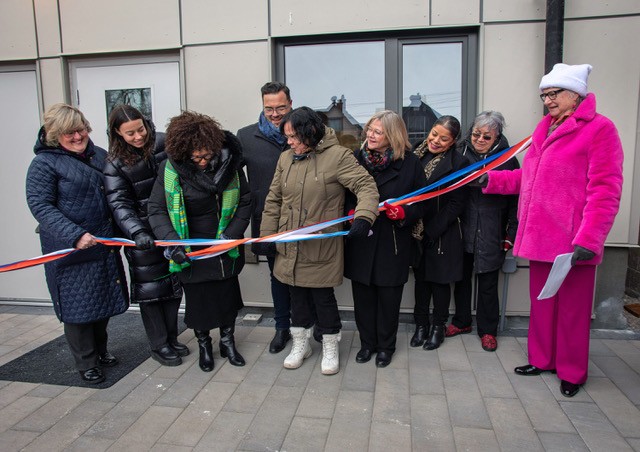
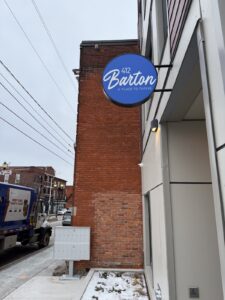
 When the doors opened at 412 Barton Street East on December 9, it marked far more than the completion of a building. It marked the fulfilment of a promise made by St. Matt’s—one rooted in faith, sustained by community, and shaped by a shared belief that everyone deserves a safe, dignified place to call home.
After years of visioning, partnership and determination, St. Matt’s has completed a 15-unit deeply affordable apartment building for Indigenous and racialized seniors experiencing homelessness. For many across the Diocese of Niagara who supported this project through funding, advocacy and awareness, 412 Barton stands as a tangible expression of what becomes possible when faith is paired with action.
From the outset, the project was guided by a commitment to truth, reconciliation and justice. St. Matt’s has been clear that this work is an act of reconciliation— acknowledging that the land on which 412 Barton stands was originally stewarded by Indigenous peoples, and committing to build in ways that honour dignity, belonging and community for those who have been historically excluded.
Built with Care, Speed and Purpose
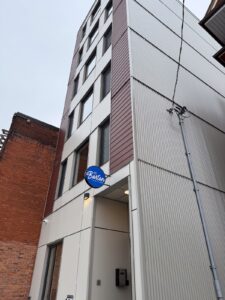 412 Barton is an innovative modular construction project, designed to respond urgently and thoughtfully to Hamilton’s housing crisis. Built off-site and assembled on location, the entire exterior structure was completed in less than three months—a remarkable achievement in today’s construction environment. Pre-clad modular wood panels allowed the building to be constructed right to the lot line, maximizing space while respecting the surrounding neighbourhood.
Beyond speed, the building’s performance exceeds expectations. The modular construction delivers energy performance approximately 25% better than Ontario Building Code requirements, ensuring long-term sustainability and lower operating costs—an important consideration for deeply affordable housing.
Equally intentional were the materials and interior design choices. Floor panels and walls made from Canadian-sourced timber have been left exposed where possible, a decision shown to increase well-being and a sense of calm for residents. Each unit includes a full kitchen with modern appliances, including dishwashers, spacious bathrooms, high ceilings, and an abundance of natural light. Accessibility features are woven throughout, and shared resident spaces foster connection while respecting privacy.
A Journey Marked by Community
The completion of 412 Barton builds on earlier moments of celebration and reflection. At the project’s midpoint, partners gathered to sign the building walls — signatures that are now sealed within the structure itself, symbolizing a collective, enduring commitment to Indigenous and Black seniors in Hamilton.
Throughout the campaign, the message was consistent and heartfelt: home is a safe haven, a place to rest, a place to thrive. That language resonated deeply with parish communities across the Diocese, many of whom responded with generosity, prayer and advocacy.
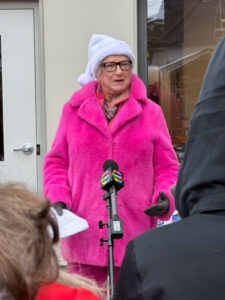
“The 412 Barton delivers deeply affordable housing during a crisis never seen before in Canada. We’ve been proud to work alongside the Afro-Canadian Caribbean Association and the Hamilton Regional Indian Centre alongside the Anglican Diocese of Niagara,” says Renée Wetselaar, executive director of St. Matt’s. “Building bridges is what we do and represents who we are.”
St. Matt’s board chair Melanee McAulay agrees. “Partnership is the key in supporting our racialized seniors,” she says. “The Black and Indigenous community is under represented in the social justice arena, and these homes are a start in addressing this imbalance.”
Faith in Action
The opening ceremony reflected the spiritual grounding of the project, incorporating Land and Ancestors Acknowledgements, a fire pit, and wording drawn from the Seven Generations and the Seven Principles of Kwanzaa. These elements underscored a central truth: housing is not merely shelter, but a foundation for healing, dignity and renewed possibility.
For the Anglican parishes who walked alongside this journey—through financial support, moral encouragement and community storytelling—412 Barton is a shared accomplishment. It stands as a testament to what faith communities can achieve when they listen deeply, act courageously and commit to long-term transformation.
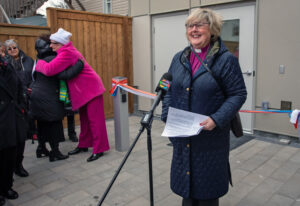
“The Anglican Diocese is deeply grateful to have played a role in helping bring this vision to life, grounded in justice, compassion, and reconciliation,” said Bishop Susan Bell at the opening ceremony. “Creating a home is sacred work. It restores hope, stability and the truth that every human being is worthy of safety, care, and belonging.”
As residents begin to settle into their new homes, the legacy of 412 Barton is already clear. This is not just a building completed, but hope made visible — a place where seniors who have endured far too much instability can finally rest, belong, and thrive.
Jane Allison is the donor relations and communications officer at St. Matt’s

Video Killed the Radio Star