
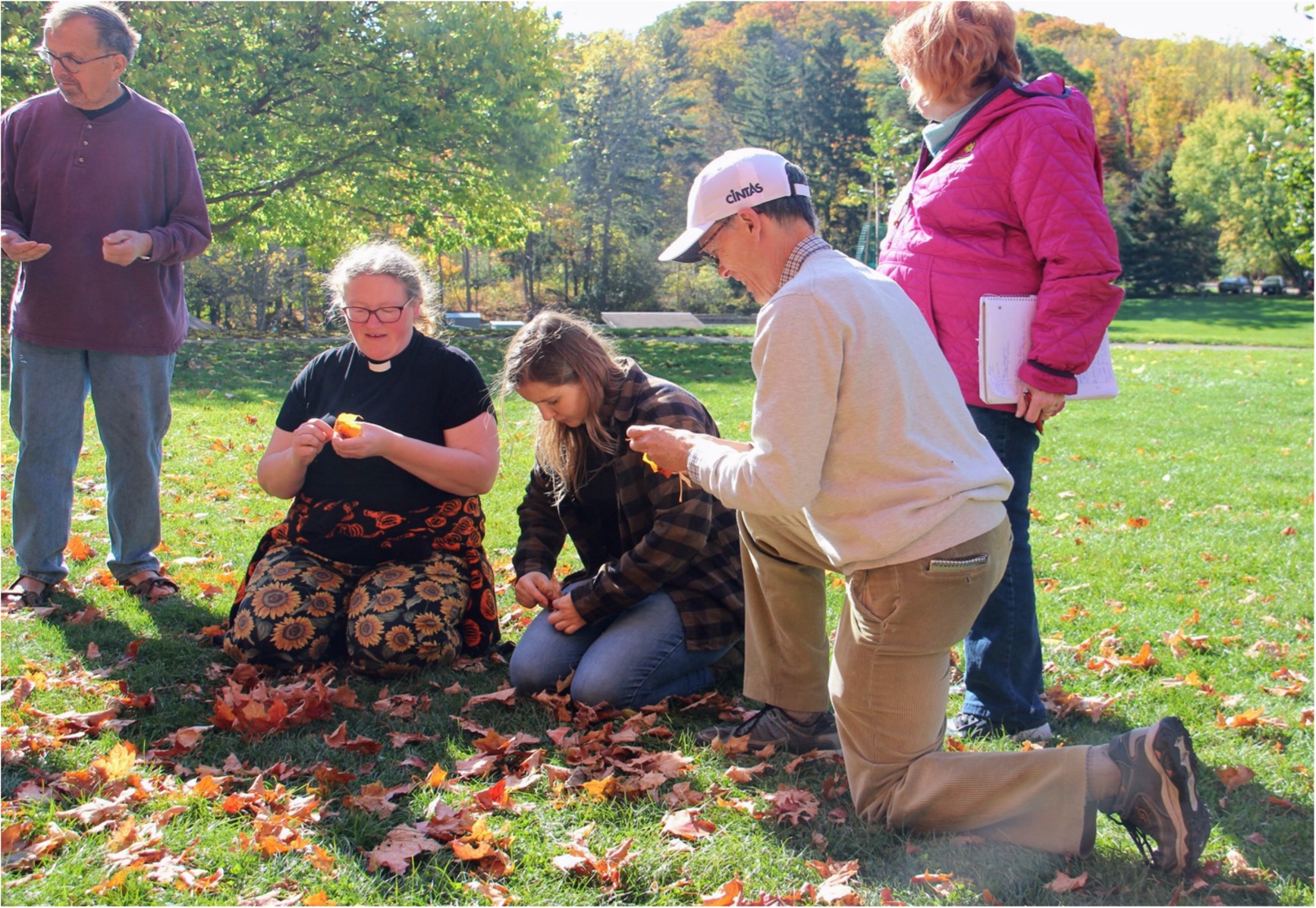
In a world where headlines are dominated by chaos, confusion, and climate change, a growing movement is inviting people to slow down and reconnect with hope—by stepping outside. A Forest Church practitioner, the Reverend Rachel Summers, recently held a Forest Church workshop at Canterbury Hills, which is drawing attention for its unique approach to a missional spirituality: worshipping in nature. It is also a good model for engaging with those who have left churches or have no experience of Christianity.
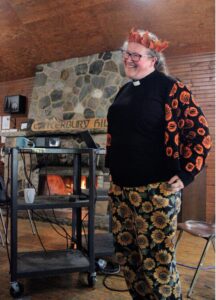
Forest Church is not simply a traditional church service relocated outdoors. Instead, it seeks to engage with creation itself and reach beyond church, blending ancient traditions with modern research on the benefits of spending time in wild places. “Forest Church is a movement rather than an organization,” explained the Revd. Rachel Summers, a pioneer of the movement and author of Messy Church Goes Wild; Wild Advent and Wild Lent. “It grows organically out of different areas, shaped by the context it’s rooted in—like wine, you can tell where it’s grown by its terroir.”
Participants at the workshop described moments of deep connection and inspiration. The Reverend Cheryl Barker, rector of St. George’s in Georgetown, said, “The Forest Church workshop surprised me with how much I have been missing by putting worship into four walls. Being outside and feeling a part of God’s creation made me feel more connected to Jesus’ message. What a joyful experience to be with God in nature and feel like a kid again!”
The workshop also highlighted a startling statistic: children today spend less time outdoors than people in prison. “We tell them the outdoors is dangerous, yet we give them a smartphone and tell them to stay in and play online,” Summers noted. According to a 2023 survey by Tearful Canada and A Rocha, 88% of young people see caring for creation as essential to the Gospel message, but two-thirds say the church isn’t doing enough—or hasn’t even mentioned creation care in sermons or outreach.
Summers encouraged participants to deepen their understanding by reading eco-theologians, especially Canadian Indigenous writers such as the Reverend Dr. H. Daniel Zacharias and Reverend Dr. Christopher White.
Nicole Smith, a training commissioned lay missioner, said she was inspired by the practical examples for building community among the dechurched and unchurched. “Mission needs to be about holding space for communities that have a vital life of their own, not just pipelines for church attendance.”
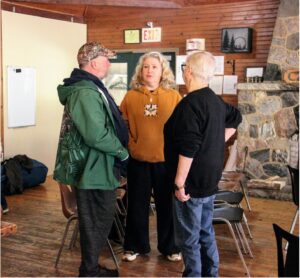
For many, Canterbury Hills itself has played a vital role in nurturing creation-focused spirituality. The Revered Canon Dr. Barry Randle of St. Paul’s-Caledonia emphasized that Forest Church can help believers take seriously their baptismal promise to safeguard the integrity of God’s creation. Sarah Bird, Missional Formation Coordinator for the Anglican Diocese of Niagara, stated, “I also valued her [Rachel Summer’s] insight that the outdoors offers a welcoming, sensory-rich space for everyone, including those who are neurodivergent.
“Forest Church is an important form of eco-missional initiative that opens up the Christian faith through direct encounter with nature,” said The Reverend Canon Dr. Ian Mobsby, Diocesan Community Missioner for the Anglican Diocese of Niagara. “It creates sacred spaces where de-and unchurched children, youth, and adults can experience God’s presence in the natural world. We are deeply grateful to the Revd Rachel Summers, an ordained English Missioner, for sharing her wisdom and experience in helping us explore this transformative expression of missional church.”
As climate concerns grow and traditional church attendance declines, Forest Church offers a fresh path—one rooted in contemplation, community, and care for the earth. In closing, Bird offered, “The Forest Church experience was a beautiful reminder that faith and nature are deeply intertwined, and that sacred encounters can happen anywhere.”

Holding Things and Letting Go