
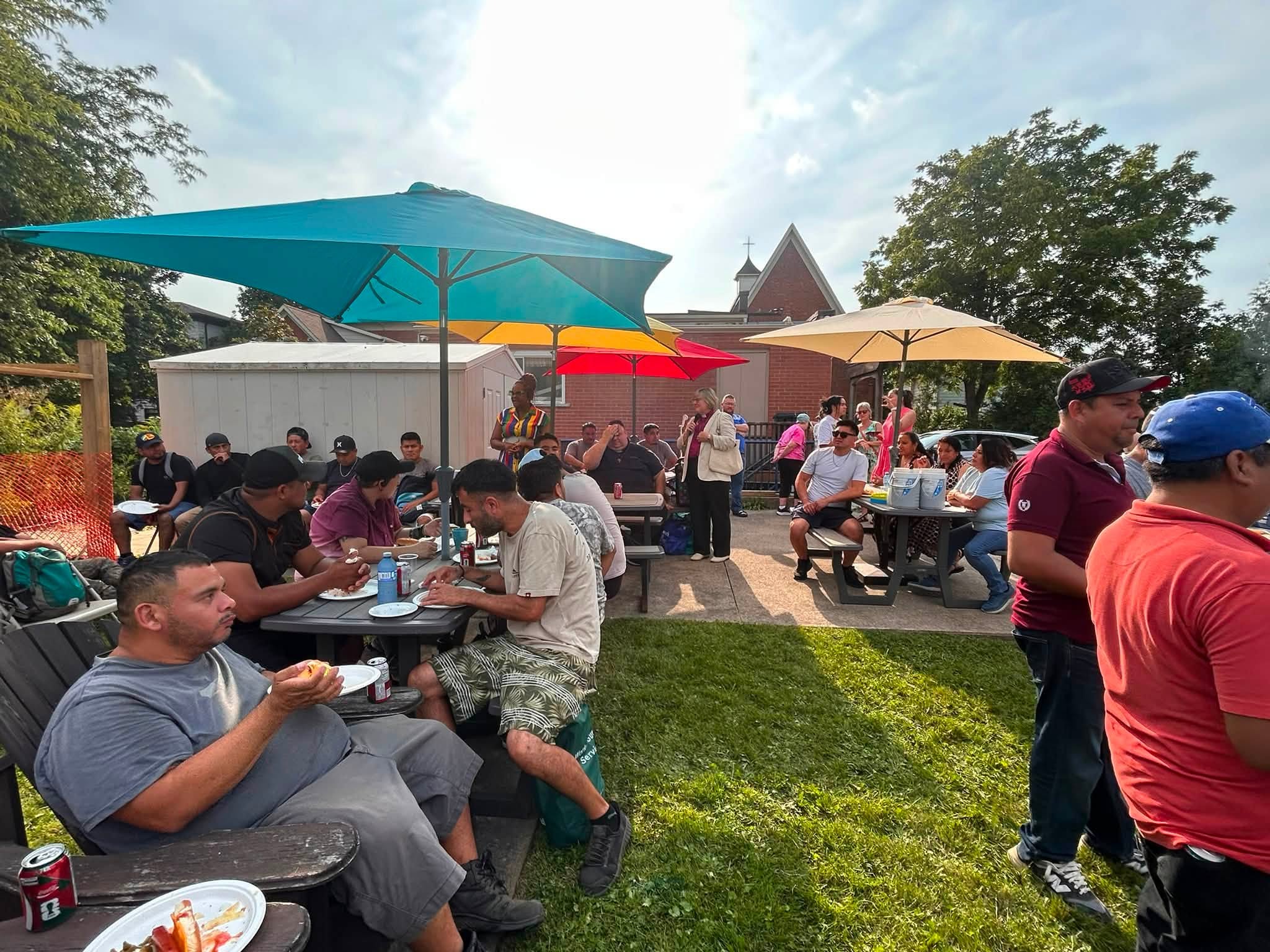
At its historical 44th General Synod in London, Ontario (June 23 to June 30, 2025), the Anglican Church of Canada (ACC) brought together delegates from across Canada to pray, discern, deliberate, foster spiritual renewal, and enact important policies to continue the important work of Christian evangelization and witness for the 21st century. Part of the continuing mission of the Church is to advance and promote the prophetic work of justice on behalf of the marginalized. One of the important communities identified by the General Synod was the migrant workers in Canada. There are approximately 900,000 migrant workers in Canada who comprise 5% of Canada’s overall labour force. They are employed in key sectors of the Canadian economy that face chronic labour shortages, such as agriculture, forestry, fishing, hospitality and food services.
To address the concerns of the migrant workers, a motion was moved by Bishop Susan Bell, bishop of the Diocese of Niagara and seconded by Blessing Shambaré, rector of St. John the Evangelist, Edmonton, AB. The motion was carried.
The commitment of the ACC is to formulate a national strategy for local ministries of hospitality and advocacy with migrant workers in Canada in order to support the needs of migrant workers and address the systemic injustices that migrant workers experience, such as trafficking, unsafe working and living conditions, improper compensation practices, access to medical and mental health care, and serious consideration when it comes to legitimate grievances and concerns.
The Office of General Synod endeavours to share and promote resources that will support and connect the participation of local Canadian Anglican parishes and groups in ministries of hospitality and advocacy in partnership with migrant workers and migrant serving organizations, including resources that:
- Raise awareness and promote learning about the contributions of migrant workers to local and national food security, economy and community;
- Raise awareness about migrant worker experiences in Canada, including learning about and responding to:
- The root causes of enforced migration;
- Migrant exploitation and labour abuses in Canada;
- Misinformation, discrimination, and xenophobia; and
- Enable faith-based initiatives including ministries of:
- Pastoral care and worship;
- Study and prayer that ground service and advocacy in scriptural and theological teachings about welcoming the stranger and protecting the vulnerable;
- Enabling relationships between migrant workers and local parishes and congregations that build mutual understanding, friendship and support;
- Direct services that meet basic needs, such as clothing, language skills, shelter, transportation, access to health care, and more; and
- Empowerment programs in support of migrant organizing and advocacy for their own rights.
- Strengthen Anglican participation and partnerships of collaboration with local, regional, and national migrant justice networks, ecumenical groups, civil society organizations, and government agencies to address issues and solutions holistically; and
- Enable effective ministry monitoring, evaluation, and long-term sustainability and vision.
In terms of systemic injustice, the General Synod recognized that Canadian foreign and immigration policies can be seen as complicit in enforced migration globally and are associated with ongoing experiences of precarious living and working conditions for migrant workers in Canada. Without a legitimate pathway to permanent residency status, migrant workers, of whom the vast majority are taxpayers, have restricted access to social services and few guarantees of their labour rights. Immigration policies, rather than addressing real labour needs, restrict opportunities for residency, which encourages unstable and potentially exploitative migrant work contexts. Moreover, migrant workers have no legal right to organize or form a union to advocate on their behalf.
Unfortunately, few Canadians are aware of migrant workers who are all but invisible in our rural and urban workplaces. Many of us know little about migrant workers’ experiences and their direct contributions to local, regional, national, and international economies and food security.
This resolution serves to support existing and future Anglican ministries with migrant workers from coast to coast to coast through providing resources and connections for the church’s leaders and members with other faith-based communities also engaged in similar ministries of hospitality and advocacy. It also serves to build bridges between diverse communities in Canada, such as migrant and Indigenous peoples, and supports education toward racial justice.
This resolution serves to strengthen the Church’s commitment to recognize, uphold and defend the dignity of every human being, and work toward the dismantling of racism and colonialism within the church and beyond. This resolution seeks justice and aspires to nurture and sustain right relationships among people of faith in local, national, and global communities and networks.
Diocese of Niagara

In the Diocese of Niagara, the Migrant Farmworkers Project has been responding to the needs of the migrant farmworkers in the Niagara region for nearly 15 years. And under the avid leadership of Bishop Bell and with the approval of Synod Council, the Diocese of Niagara has designated the Migrant Farmworkers Project to be a diocesan mission, effective October 1, 2025.
“This designation takes our diocesan ministry with migrant farmworkers to the next level,” said Bishop Bell. “Niagara is truly becoming a mission-shaped Church, responding to God’s call in ways that meet spiritual and pastoral needs.”
This Spirit-led ministry reaches out primarily to Spanish-speaking farmworkers from Latin America and workers from the Caribbean who come to Canada. Of the estimated 5000 migrant farmworkers, about 25% work in Southern Ontario, supporting local farmers with their harvests. The mission supports workers throughout the Niagara Peninsula by offering opportunities for worship, a place to gather in community, access to medical care, translation services, bicycles for transportation, education workshops on rights and safety, seasonal clothing, and more.

The mission operates out of two hubs where workers can gather: St. Alban’s in Beamsville and the public library in Fenwick. The hubs host a café with access to wi-fi and fresh, home-cooked meals made to go. Many of the workers stay and enjoy the company. The Beamsville hub also hosts a community closet for seasonal clothing and personal care items, private medical rooms for access to Quest Community Health services, a food bank, and a bike repair shop, which supplies bikes to workers at a small cost for easy transportation. Both hubs offer meeting areas where they can host educational workshops, celebrations, and more.
The mission designation comes as the Reverend Peter Ciallella was formally instituted as the ordained missioner for the Migrant Farmworkers Project and the rector of St. John the Evangelist in Winona. Ciallella meets with the workers at the hubs and directly at the farms. This is particularly helpful for workers who are working late hours or are too far from the hubs for easy transportation to join the weekly gatherings. The mission works to make sure that the workers have access to the necessities to meet their physical, mental, and spiritual health needs.
“I engage in a conversation with the workers and provide spiritual service,” reflected Ciallella, on how he meets the spiritual needs of the workers, in a recent article for the Niagara Anglican. “We also have Eucharist both at St. Alban’s Church in Beamsville and St. John’s in Jordan.”
Under Ciallella’s guidance, the mission has several new goals with this new designation to expand its impact. The first is establishing a community for newcomers to Canada from Latin America and connecting that community with our migrant farmworkers. With the support of Ciallella’s wife, Sandra, the second goal is to make sure the communities feel accessible to all genders. Once this has been established, the team can then build up the spiritual dimension of the mission through worship, retreats, and formation.
The mission relies on volunteers and donations to provide its successful services. In the past, the mission largely depended on the vision and direction of the missioner. With the designation, an advisory board has been established and uses a collaborative, team approach that includes input from diocesan leaders. This new board helps give the missioner the support they need to implement the vision of the mission in line with the diocesan Mission Action Plan.
One of the important goals of the Mission Action Plan is to implement a new support system for migrant women who encounter unique challenges they face both in Canada and in their own home country. A growing number of migrant women have come to the hub to seek support and renewal.
In the future, the Migrant Farmworkers Project Mission hopes to connect and build on the network of ministries across Canada with other Anglican churches, missions and faith communities in order to strengthen and support the churches and organizations committed to the cause of serving our migrant workers in Canada. As a mission project, we continue to employ a hermeneutical lens informed by the Gospel, our ecclesial tradition, the evolving dynamics of mission, and the lived experience and culture of our migrant sisters and brothers. When we walk with our migrant sisters and brothers and learn to become “migrants with the migrants”, we not only fulfill and invigorate our own vocation as missioners, but indeed the Church’s mission on behalf of all migrants.

Do Not Judge: A Major Hindrance to Sharing Faith